
In vivo characterization
Characterization of new Alzheimer Knock-in model (APP-SAA)
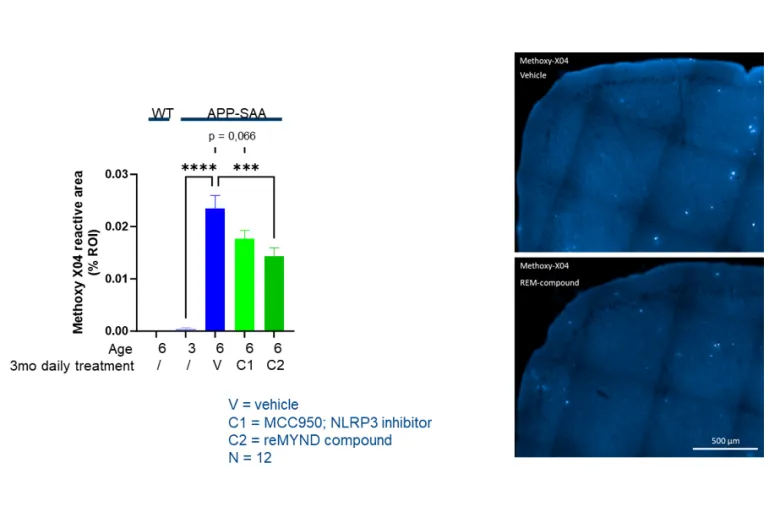
reMYND obtained and characterized an immunodeficient APP knock-in mouse, generated by VIB, to be used for the in vivo characterization of the iPSC-derived microglia.. The APP knock-in mouse model showed a clear progressive increase of brain amyloid pathology starting at an age of 3 months. reMYND was able to detect treatment effects on pathology (Figure 11) by treating the mice with their in-house compound or an inflammasome inhibitor, proving it’s applicability as a tool for efficacy studies. This work was partially published in: Princen et al; Science.
Xenotransplantation of the iPSC-derived microglia
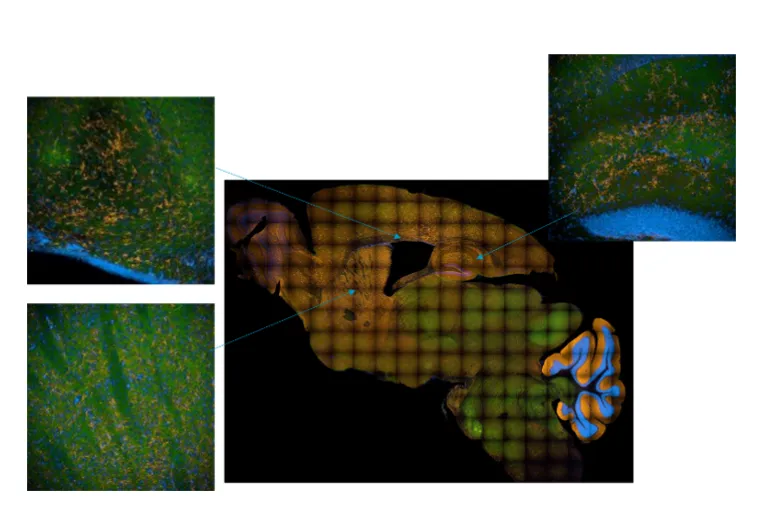
reMYND developed a chimeric mouse by xenotransplantation of the human iPSC-derived microglia into the brain of the the immunodeficient APP knock-in mouse. A first step to develop this mouse model is to eradicate endogenous mouse microglia effectively. After optimizing the administration of BLZ945, a CSF-1R inhibitor, reMynd was able to eradicate 80% of endogenous microglia at the moment of grafting human iPSC-derived microglia. Below, a microscopic image of a one-month old immununodeficient WT mouse grafted with control microglial precursors derived from iPSC’s (Figure 12). The image clearly indicates a broad distribution of human microglia (red) across the entire brain. With high efficiency in cortical and hippocampal areas, the main region’s of interest in AD. After obtaining the APP-SAA knock-in mouse line (Denali) we were able to characterize the model to see how suited it would be to incorporate in our portfolio for efficacy testing for our clients. The model showed a clear progressive increase of brain amyloid pathology starting at an age of 3 months.
Single-cell RNA sequencing
At 6 months of age the human microglia were sorted out of the mouse brain by VIB to profile the RNAs expressed in each individual human microglia (single cell RNA-sequencing). The single-cell RNA seq data were analyzed using a bioinformatics pipeline to assess the impact of genetic heterogeneity on the human microglial transcriptome. More specifically, the analysis looked at the impact on overall RNA expression as well as different microglial cell states that these microglia can adopt in response to the exposure to amyloid-beta plaques in the mouse brain.
Presentations/Posters
Poster at ADPD2023: Evaluation of the major pathological hallmarks in the humanized APPSAA knock-in mouse model, in response to drug treatment
Oral talk at SFN2023: Compound intervention affects pathology in a novel humanized APP knock-in mouse model (APPSAA), strengthening its relevance as a tool in preclinical research