Home

Dementia is a prevalent clinical syndrome with devastating consequences. Currently, over 190 000 people in Belgium are estimated to suffer from dementia, for which Alzheimer’s Disease (AD) is the most frequent cause. More specifically, it accounts for up to 80% of the dementia cases and its prevalence is expected to double by 2050 (Alzheimer Europe 2023). Alzheimer’s disease is the result of a complex interplay of both genetic and environmental factors, but it remains poorly understood to this day. However, continuous research efforts towards understanding the different facets of the disease are being made.
Measures of your genetic risk to develop Alzheimer’s Disease (polygenic risk scores (PRSs)) are gaining attention in research and clinical practice. Although PRS currently has shown its usefulness in cardiovascular disease as well as in breast cancer, the utility of PRS in neurodegenerative disease such as AD is not widely understood. As such, a research project named “Polygenic Risk scoring and deep Immunophenotyping strategy to Master Alzheimer’s disease” (PRISMA, in short) was set up under the auspices of the Flemish Institute for Innovation and Entrepreneurship (VLAIO). Within a consortium of academic and industrial partners, different aspects of PRS within the field of AD have been studied.





The PRISMA consortium is determined to push Alzheimer’s disease (AD) into the field of personalised medicine. The central hypothesis of this project is that an individual polygenic risk score (PRS) can be directly translated into specific pathways that trigger and drive AD. Using two well-characterised Flemish cohorts, the knowledge about genetic risk and immune biomarkers in AD was expanded.
The PRISMA process
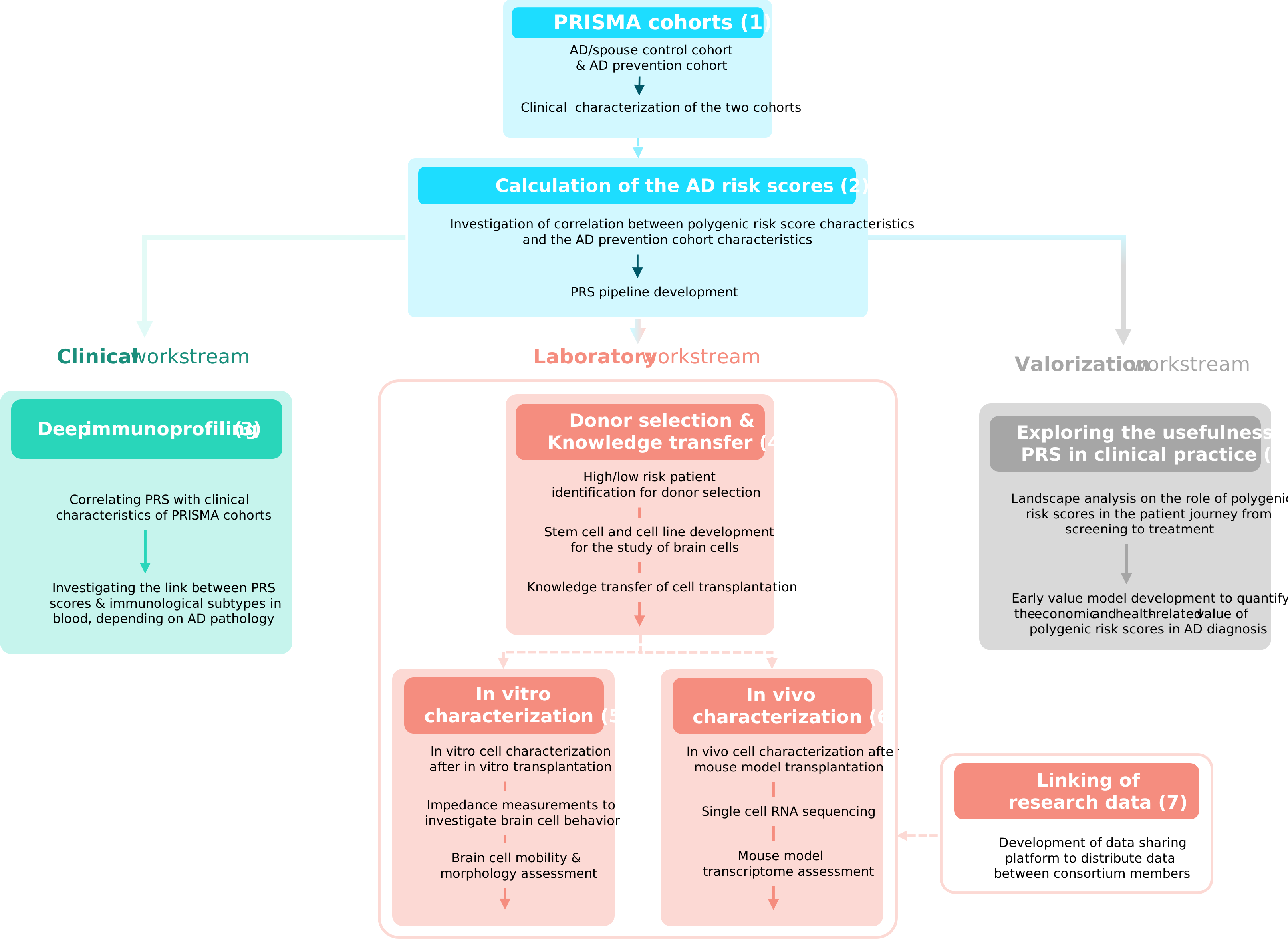
In order to visualize the activities that were done within the project a process diagram was developed. This shows an overview of activities performed by the different consortium partners within the PRISMA project. Activities closely linked to each other are combined into one building block (see flowchart). With this process diagram we aim to give a high-level understanding of the different activities and how they all link together.